Background and methods
Text version
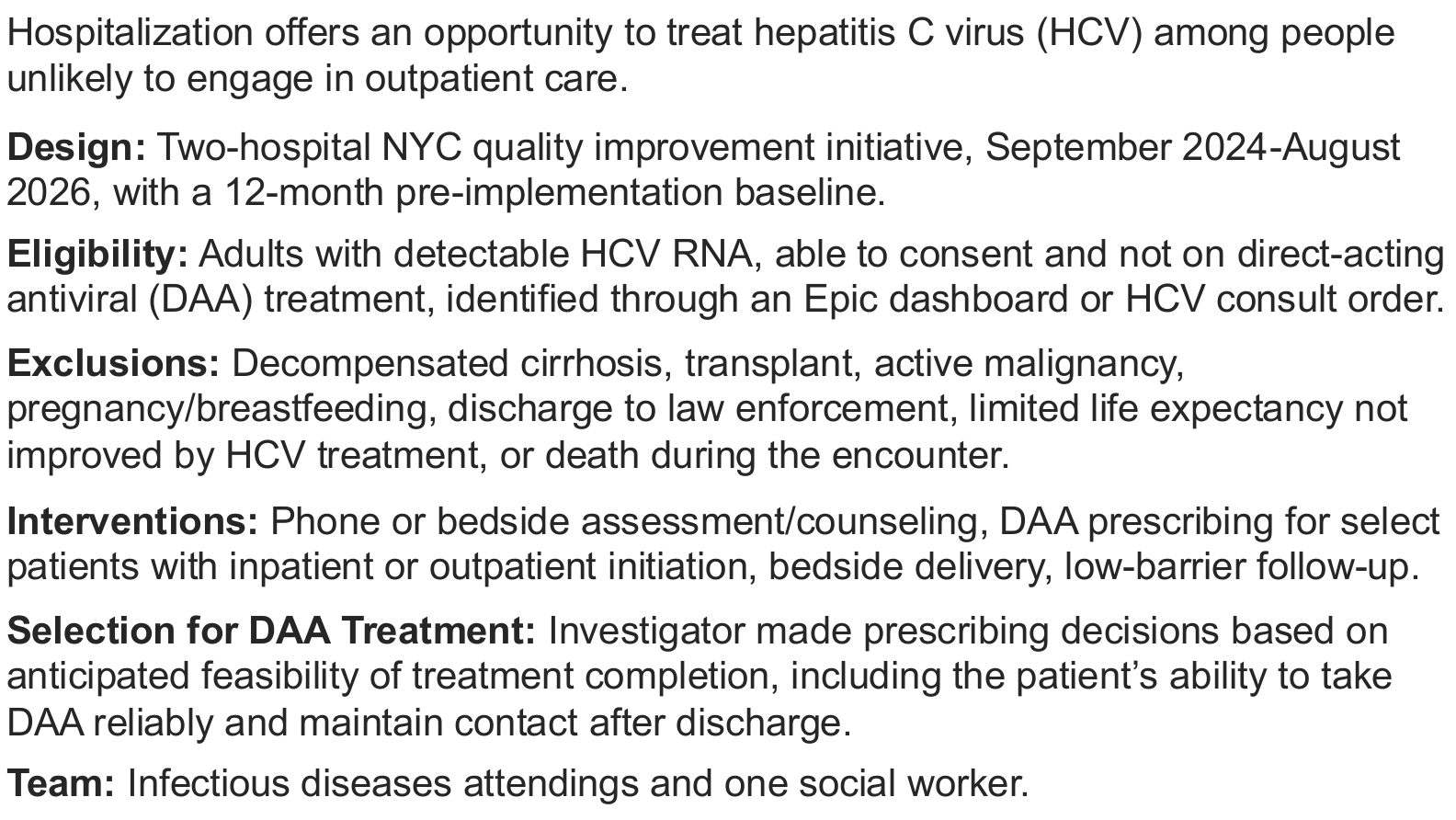
Hospitalization offers an opportunity to treat hepatitis C virus (HCV) among people
unlikely to engage in outpatient care.
Design: Two-hospital NYC quality improvement initiative, September 2024-August
2026, with a 12-month pre-implementation baseline.
Eligibility: Adults with detectable HCV RNA, able to consent and not on direct-acting
antiviral (DAA) treatment, identified through an Epic dashboard or HCV consult order.
Exclusions: Decompensated cirrhosis, transplant, active malignancy,
pregnancy/breastfeeding, discharge to law enforcement, limited life expectancy not
improved by HCV treatment, or death during the encounter.
Interventions: Phone or bedside assessment/counseling, DAA prescribing for select
patients with inpatient or outpatient initiation, bedside delivery, low-barrier follow-up.
Selection for DAA Treatment: Investigator made prescribing decisions based on
anticipated feasibility of treatment completion, including the patient’s ability to take
DAA reliably and maintain contact after discharge.
Team: Infectious diseases attendings and one social worker.
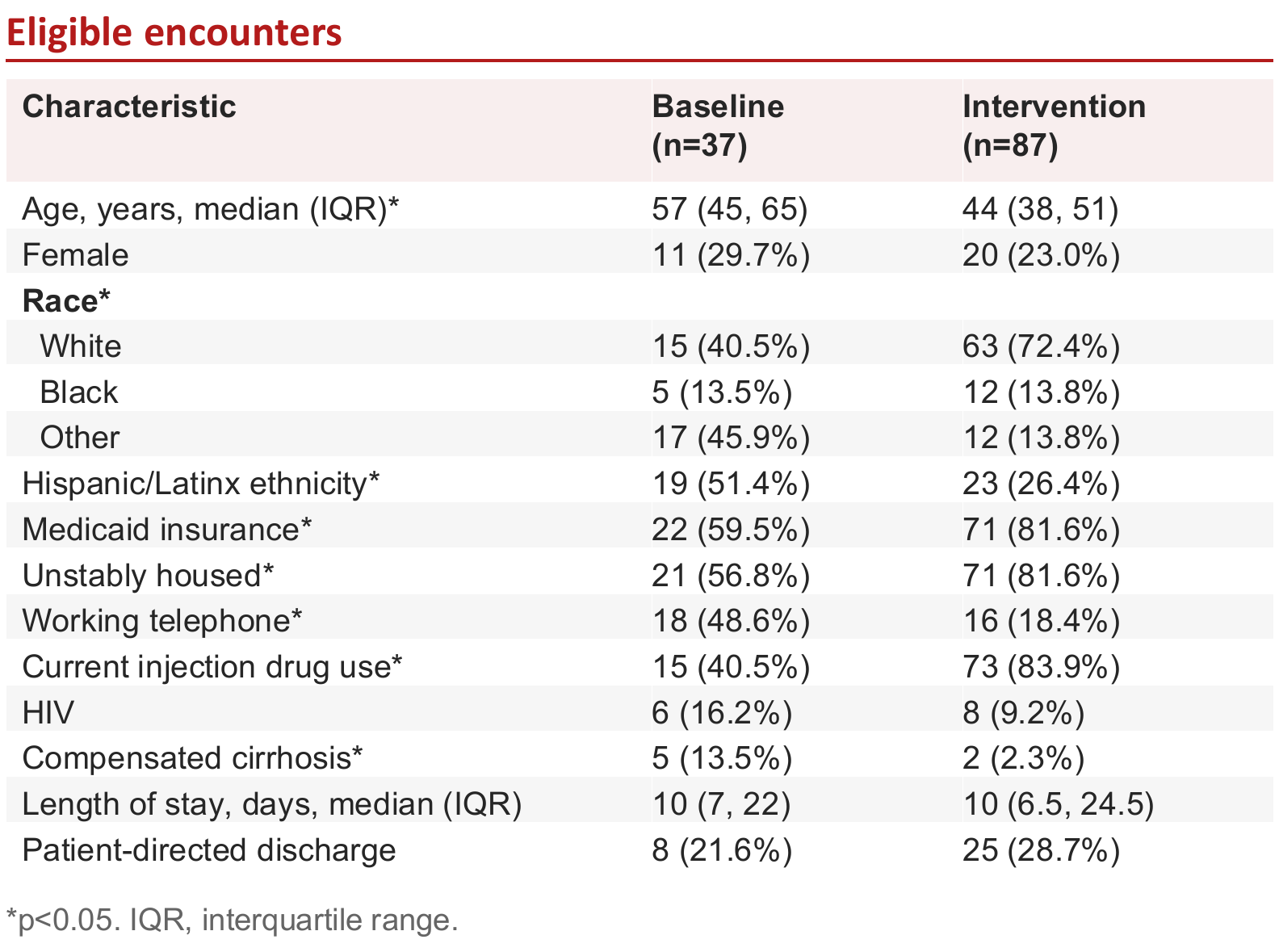
Eligible encounters
Text version
Eligible encounters
Characteristic Baseline Intervention
(n=37) (n=87)
Age, years, median (IQR)* 57 (45, 65) 44 (38, 51)
Female 11 (29.7%) 20 (23.0%)
Race*
White 15 (40.5%) 63 (72.4%)
Black 5 (13.5%) 12 (13.8%)
Other 17 (45.9%) 12 (13.8%)
Hispanic/Latinx ethnicity* 19 (51.4%) 23 (26.4%)
Medicaid insurance* 22 (59.5%) 71 (81.6%)
Unstably housed* 21 (56.8%) 71 (81.6%)
Working telephone* 18 (48.6%) 16 (18.4%)
Current injection drug use* 15 (40.5%) 73 (83.9%)
HIV 6 (16.2%) 8 (9.2%)
Compensated cirrhosis* 5 (13.5%) 2 (2.3%)
Length of stay, days, median (IQR) 10 (7, 22) 10 (6.5, 24.5)
Patient-directed discharge 8 (21.6%) 25 (28.7%)
*p<0.05. IQR, interquartile range.
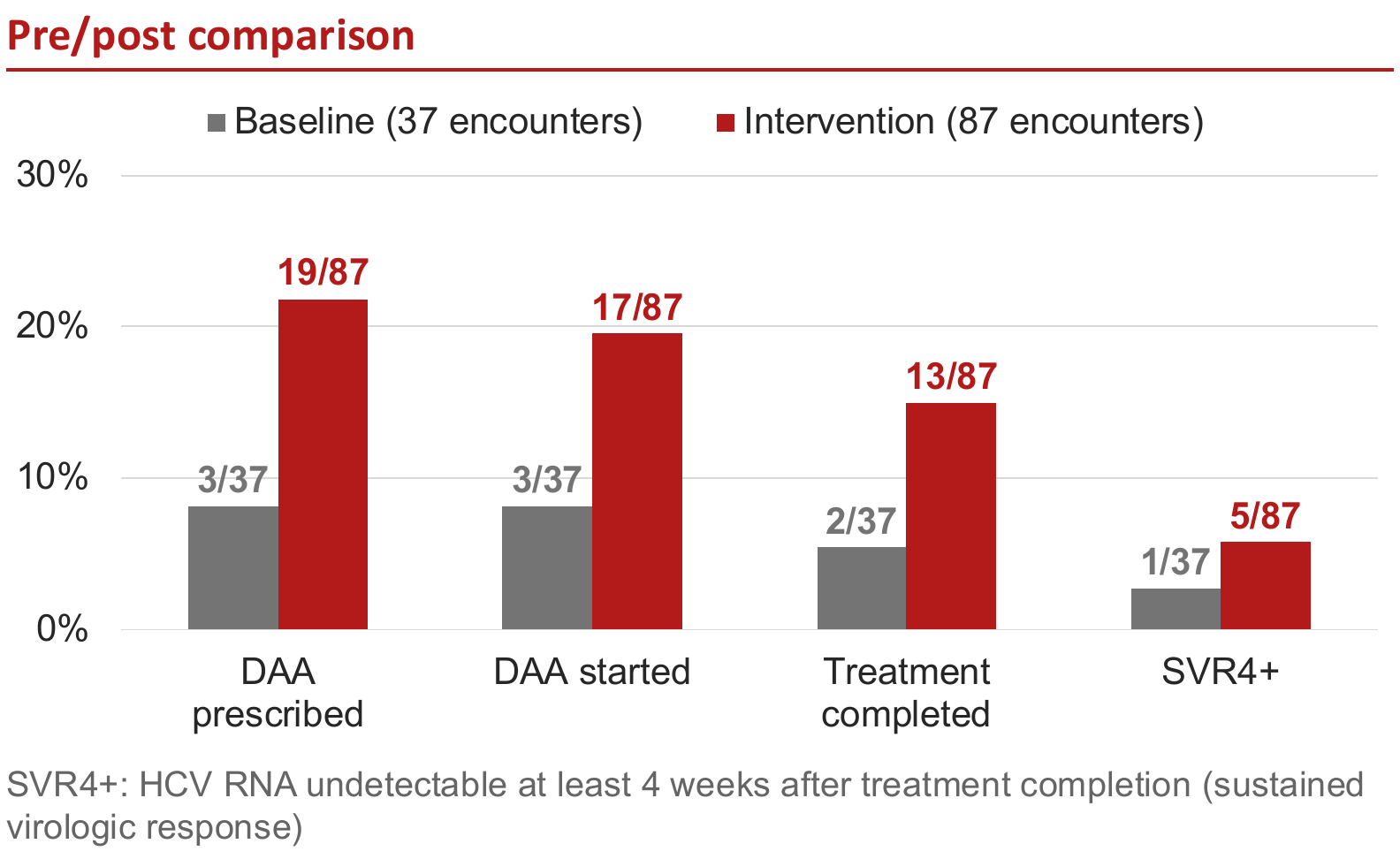
Treatment outcomes: pre/post comparison
Text version
Baseline: 37 encounters. Intervention: 87 encounters.
DAA prescribed: 3/37 versus 19/87.
DAA started: 3/37 versus 17/87.
Treatment completed: 2/37 versus 13/87.
SVR4+: 1/37 versus 5/87.
SVR4+: HCV RNA undetectable at least 4 weeks after treatment completion (sustained virologic response).
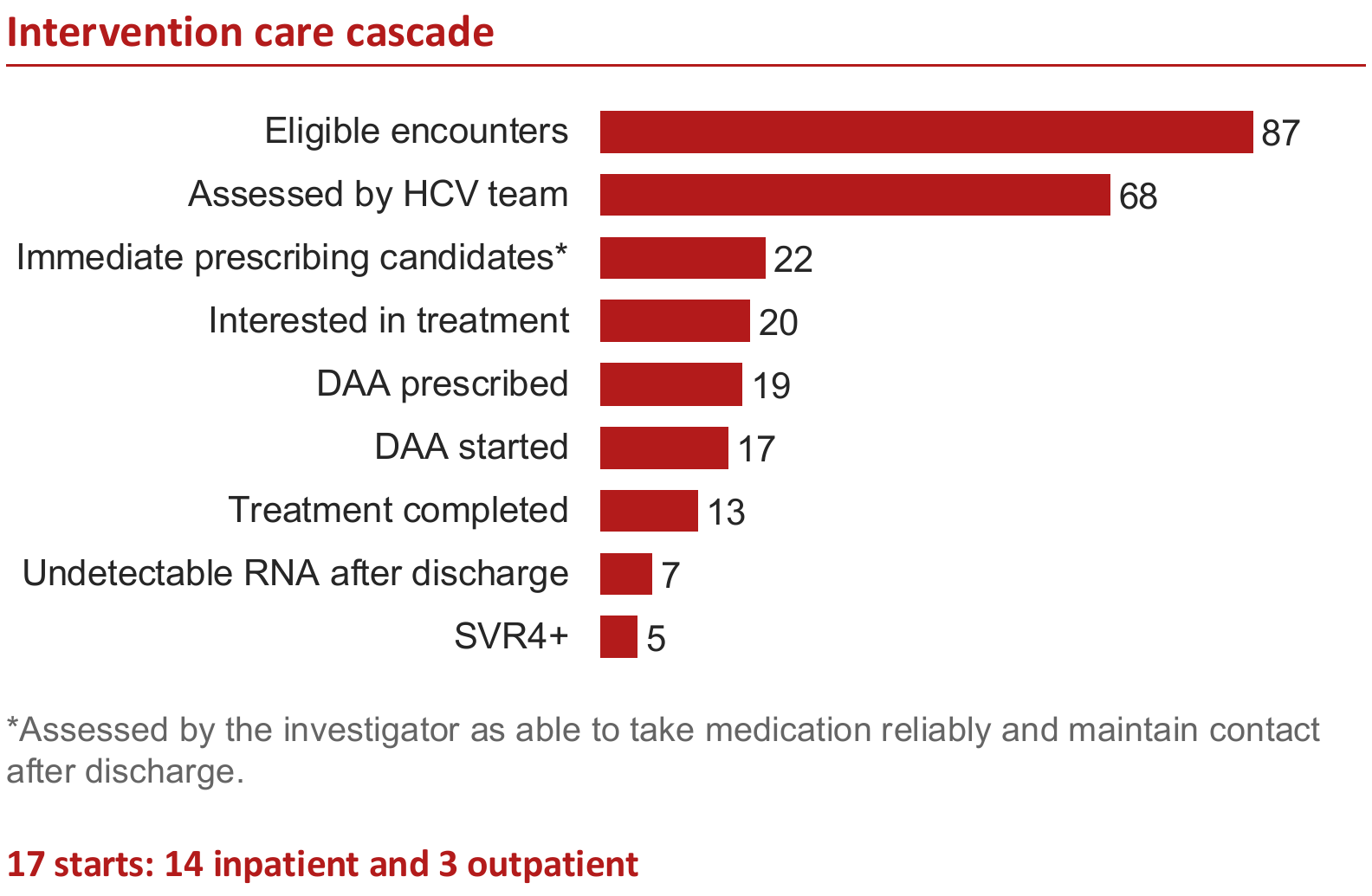
Treatment outcomes: intervention care cascade
Text version
Eligible encounters: 87
Assessed by HCV team: 68
Immediate prescribing candidates*: 22
Interested in treatment: 20
DAA prescribed: 19
DAA started: 17
Treatment completed: 13
Undetectable RNA after discharge: 7
SVR4+: 5
*Assessed by the investigator as able to take medication reliably and maintain contact after discharge.
17 starts: 14 inpatient and 3 outpatient.
Treatment feasibility: candidates for immediate prescribing
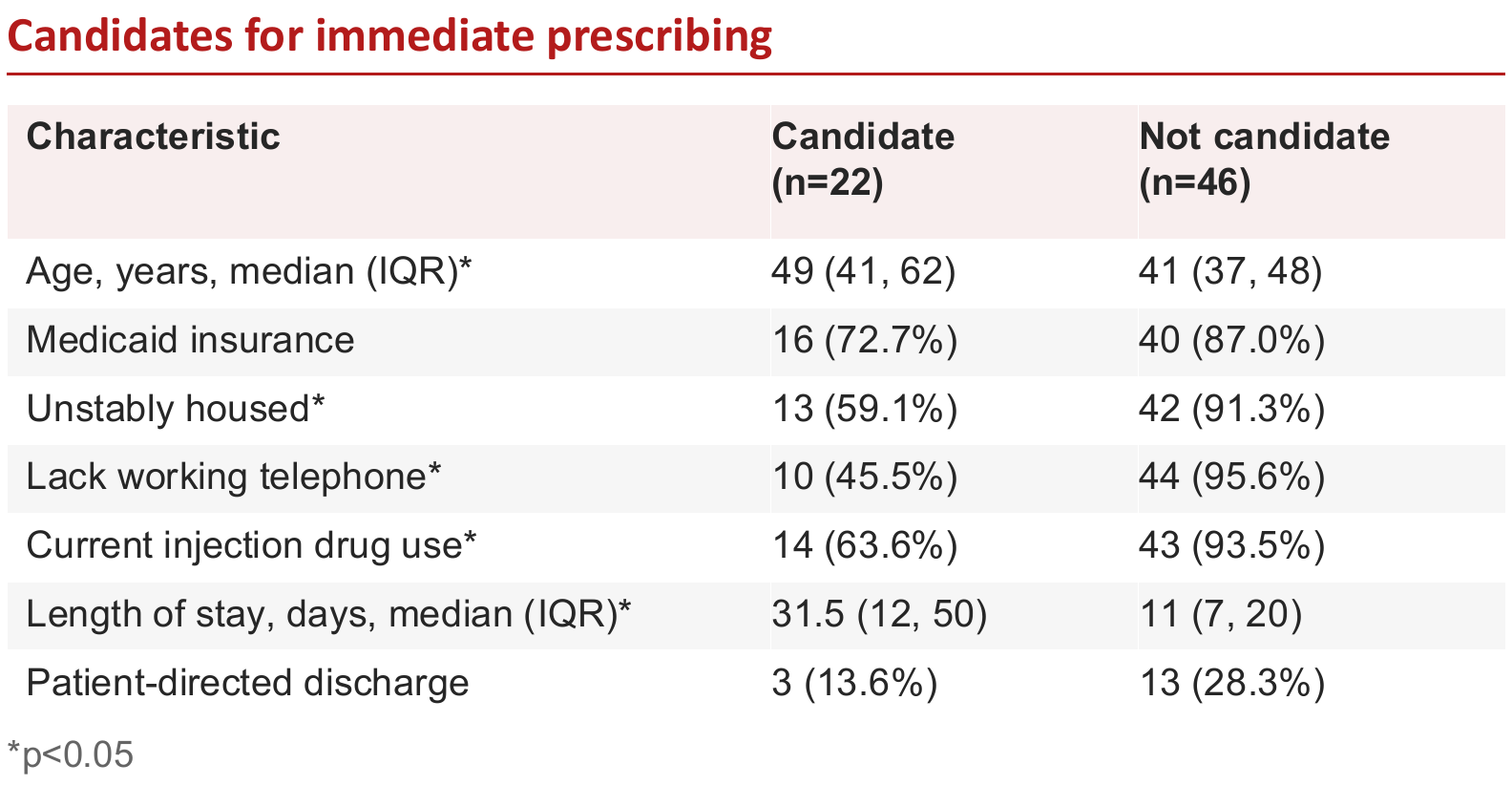
Text version
Candidates for immediate prescribing
Characteristic Candidate Not candidate
(n=22) (n=46)
Age, years, median (IQR)* 49 (41, 62) 41 (37, 48)
Medicaid insurance 16 (72.7%) 40 (87.0%)
Unstably housed* 13 (59.1%) 42 (91.3%)
Lack working telephone* 10 (45.5%) 44 (95.6%)
Current injection drug use* 14 (63.6%) 43 (93.5%)
Length of stay, days, median (IQR)* 31.5 (12, 50) 11 (7, 20)
Patient-directed discharge 3 (13.6%) 13 (28.3%)
*p<0.05
Treatment feasibility: reasons DAA was not prescribed
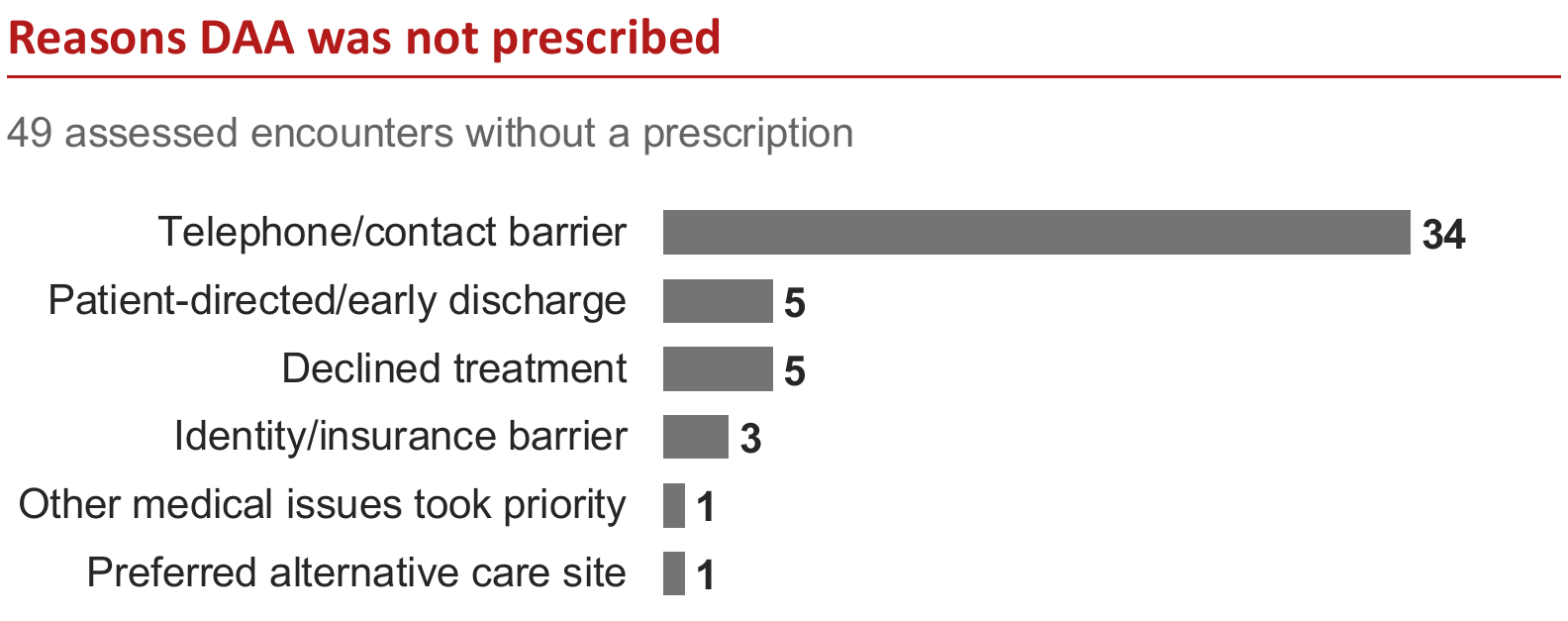
Text version
49 assessed encounters without a prescription.
Telephone/contact barrier: 34
Patient-directed/early discharge: 5
Declined treatment: 5
Identity/insurance barrier: 3
Other medical issues took priority: 1
Preferred alternative care site: 1
Treatment feasibility: why treatment was not completed

Text version
Why treatment was not completed
• Medication not collected from pharmacy (n=1).
• Patient-directed discharge before bedside delivery (n=2).
• Lost to follow-up after 2, 4, or 6 of 8 weeks (n=1 each).
Medication handoff near-misses

Text version
Medication handoff near-misses
One course was in transit when a patient left via patient-directed discharge. Another
course was nearly lost during an intrahospital transfer.
Where treatment was completed
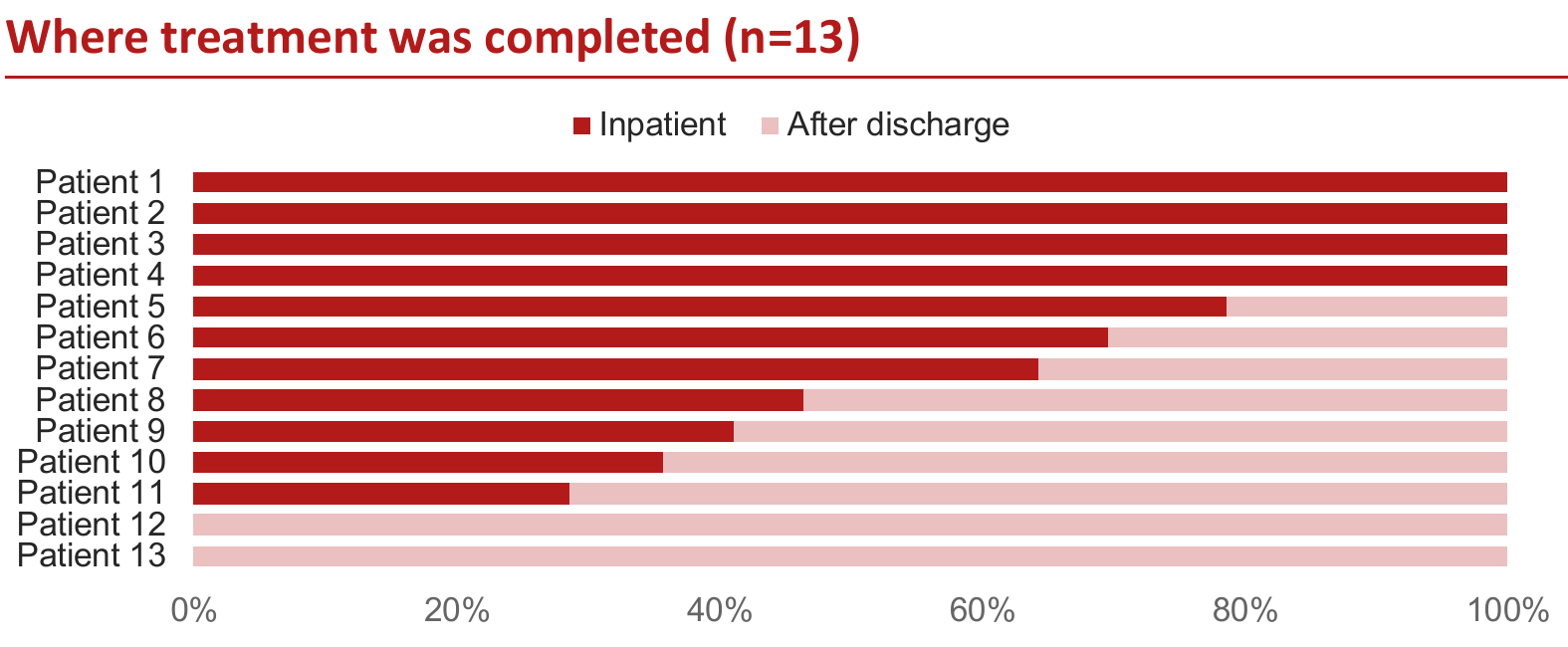
Text version
Where treatment was completed (n=13).
Patients 1–4: entirely inpatient.
Patients 5–11: partly inpatient and partly after discharge.
Patients 12–13: entirely after discharge.
The original figure shows the proportion completed in each setting for each patient.
Delivery and experience: qualitative evaluation
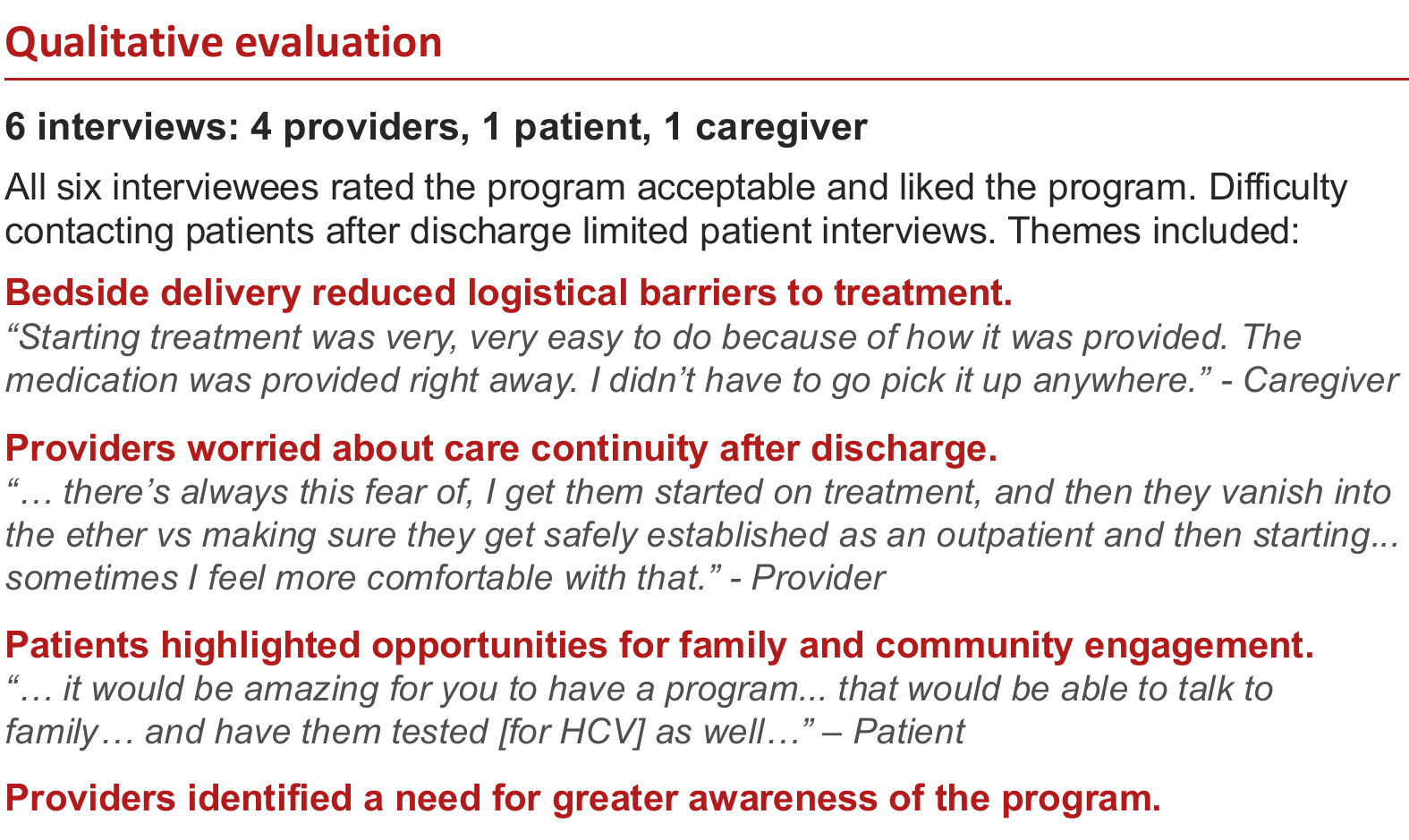
Text version
Qualitative evaluation
6 interviews: 4 providers, 1 patient, 1 caregiver
All six interviewees rated the program acceptable and liked the program. Difficulty
contacting patients after discharge limited patient interviews. Themes included:
Bedside delivery reduced logistical barriers to treatment.
“Starting treatment was very, very easy to do because of how it was provided. The
medication was provided right away. I didn’t have to go pick it up anywhere.” - Caregiver
Providers worried about care continuity after discharge.
“… there’s always this fear of, I get them started on treatment, and then they vanish into
the ether vs making sure they get safely established as an outpatient and then starting...
sometimes I feel more comfortable with that.” - Provider
Patients highlighted opportunities for family and community engagement.
“… it would be amazing for you to have a program... that would be able to talk to
family… and have them tested [for HCV] as well…” – Patient
Providers identified a need for greater awareness of the program.
Conclusions
Text version
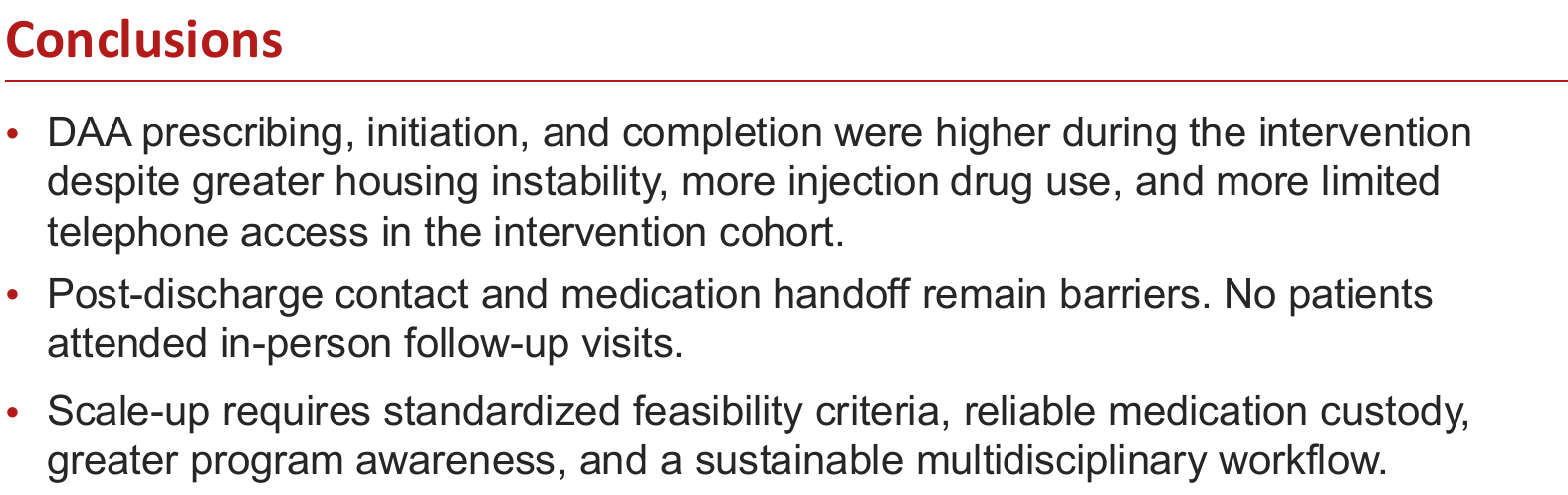
Conclusions
• DAA prescribing, initiation, and completion were higher during the intervention
despite greater housing instability, more injection drug use, and more limited
telephone access in the intervention cohort.
• Post-discharge contact and medication handoff remain barriers. No patients
attended in-person follow-up visits.
• Scale-up requires standardized feasibility criteria, reliable medication custody,
greater program awareness, and a sustainable multidisciplinary workflow.